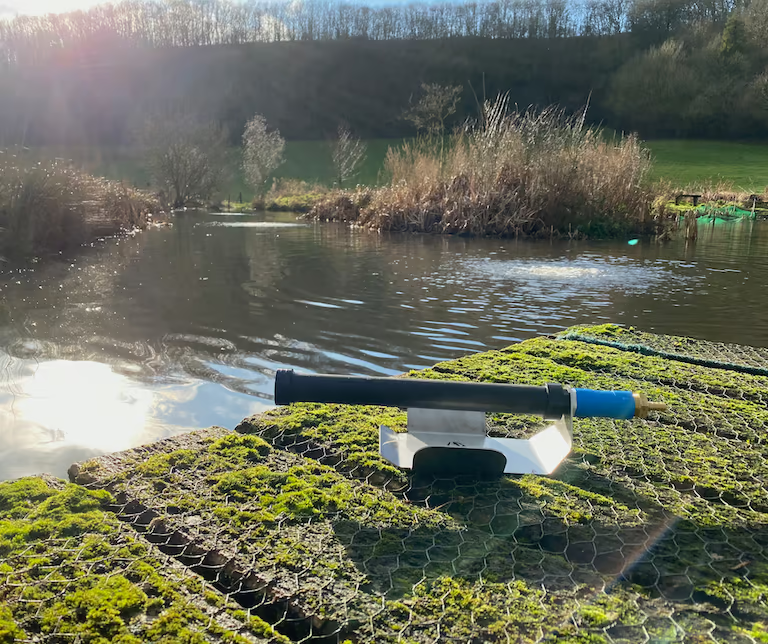

Algen sind ein natürlicher Bestandteil jedes Teichs, doch übermäßiges Wachstum kann das Erscheinungsbild, die Wasserqualität und die allgemeine Gesundheit beeinträchtigen. Erfahren Sie, wie Sie Algen aus einem Teich entfernen und die Ursachen bekämpfen, die zu ständigem Neubefall führen können.
Algen gehören zu einem gesunden Teichökosystem dazu, doch wenn das Wachstum außer Kontrolle gerät, kann dies schnell zum Problem werden. Übermäßiger Algenbefall lässt klares Wasser grün werden und bildet dichte Teppiche an der Oberfläche, was zu einer schlechten Wasserqualität und schwankenden Sauerstoffwerten führen kann.
Wenn Sie Algen aus einem Teich entfernen möchten, ist es sehr wichtig, nicht nur das zu beseitigen, was Sie sehen. Die physische Entfernung sorgt zwar für eine sofortige Verbesserung, doch wenn Sie die Bedingungen, die das übermäßige Algenwachstum begünstigen, nicht angehen, werden die Algen höchstwahrscheinlich zurückkehren.
Die genaue Ursache für das Wachstum zu verstehen, ist daher der erste Schritt zu einer langfristigen Kontrolle.
Algen benötigen zum Wachsen verschiedene Dinge, darunter Sonnenlicht, Wasser und ausreichend Nährstoffe. Ein Teich bietet diese Bedingungen von Natur aus, weshalb eine vollständige Beseitigung der Algen weder realistisch noch erstrebenswert ist.
Probleme entstehen erst, wenn das Gleichgewicht gestört ist und die Algen Zugang zu einem übermäßigen Nährstoffangebot haben.
Zu den häufigsten begünstigenden Faktoren gehören:
Meist treten mehrere dieser Faktoren gleichzeitig auf.
So können sich beispielsweise organische Stoffe allmählich am Boden eines Teiches mit schlechter Zirkulation ansammeln. Während sie zersetzt werden, gelangen Nährstoffe ins Wasser, was günstige Bedingungen für weiteres Algenwachstum schafft.
Genau deshalb führt die bloße Behandlung der sichtbaren Algen oft nur zu vorübergehenden Ergebnissen.
Die beste Vorgehensweise hängt von der Art und Stärke des Algenbefalls sowie von der Größe des Teichs ab.
Bei etablierten Teichen erfordert die Algenbekämpfung oft eine Kombination verschiedener Methoden, anstatt sich nur auf eine einzelne Maßnahme zu verlassen.
Wenn sich bereits schwimmende Algenteppiche oder dichte Fadenalgen gebildet haben, sorgt eine physische Entfernung für eine sofortige Verbesserung.
Rechen oder Kescher können verwendet werden, um erreichbare Algen aus dem Wasser zu entfernen.
Es ist sehr wichtig, das Material zu entfernen, anstatt es im Teich absterben und zersetzen zu lassen, da der Zersetzungsprozess Sauerstoff verbraucht und Nährstoffe wieder an das Wasser abgibt, was potenziell einen neuen Wachstumszyklus begünstigen kann.
Die physische Entfernung ist daher sehr wichtig, beseitigt jedoch meist nicht die Ursache für das ursprüngliche Algenwachstum.
Eine mangelhafte Zirkulation kann zu stehenden Bereichen führen, in denen sich die Wasserqualität verschlechtert und Algen gedeihen können.
Ein Teichbelüfter bewegt das Wasser und verstärkt den Austausch zwischen Wasser und Sauerstoff. Je nach verwendetem System kann dies die Zirkulation in einem Großteil des Gewässers verbessern, was dazu beiträgt, gesündere Bedingungen für den gelösten Sauerstoff aufrechtzuerhalten.
Eine verbesserte Sauerstoffverfügbarkeit unterstützt zudem die aeroben Mikroorganismen, die für den Abbau organischer Stoffe verantwortlich sind.
Für größere Teiche kann ein professionell ausgelegtes Belüftungssystem daher ein wichtiger Bestandteil einer langfristigen Strategie zur Algenbekämpfung sein.
Die Heathland Group stellt Teichbelüfter her, die auf eine Vielzahl von Faktoren wie Teichgröße, Tiefe, Form und die bestehende Wasserqualität abgestimmt sind. Die korrekte Auslegung ist sehr wichtig, da sich jeder Teich anders verhält und ein Belüftungssystem in der Lage sein muss, eine ausreichende Zirkulation für das jeweilige Gewässer zu gewährleisten.
Wenn dem Teich kontinuierlich Nährstoffe zugeführt werden, finden Algen eine leicht verfügbare Nahrungsquelle vor.
Es lohnt sich daher, genau zu untersuchen, was sowohl um das Gewässer herum als auch darin geschieht.
Mögliche Quellen können sein:
Die Reduzierung dieser Einträge kann andere Maßnahmen zur Algenbekämpfung langfristig deutlich effektiver machen.
Bepflanzte Pufferzonen rund um den Teich können zudem helfen, Nährstoffe abzufangen, bevor sie in das Wasser gelangen.
Laub, Fischabfälle und andere organische Materialien setzen sich nach und nach am Teichboden ab und bilden mit der Zeit eine Schicht aus nährstoffreichem Sediment oder Schlamm.
Deren Zersetzung erhöht zudem den Sauerstoffbedarf. In sauerstoffarmen Bereichen verläuft der Zersetzungsprozess deutlich weniger effizient, was den Zustand des Teichs weiter verschlechtern kann.
Das Entfernen von überschüssigem Schlamm bei Bedarf sowie die Vermeidung von unnötigem Eintrag organischer Stoffe können dazu beitragen, eine der Hauptursachen für anhaltende Algenprobleme zu bekämpfen.
Belüftung kann diesen Ansatz ergänzen, indem sie sauerstoffreiche Bedingungen aufrechterhält, die eine natürliche aerobe Zersetzung fördern.
Algenbekämpfungsmittel und andere Behandlungen können manchmal für eine sehr schnelle Wirkung sorgen, sollten jedoch immer mit großer Vorsicht und nur dann eingesetzt werden, wenn sie für das jeweilige Gewässer geeignet sind.
Das schnelle Abtöten einer großen Menge an Algen lässt das organische Material nicht verschwinden. Die abgestorbenen Algen beginnen zu verrotten, ein Prozess, der gelösten Sauerstoff verbraucht.
In einem Teich mit Fischbesatz kann ein signifikanter Sauerstoffabfall zu einem zusätzlichen Problem führen.
Chemische Behandlungen beseitigen zudem nicht zwangsläufig überschüssige Nährstoffe, mangelnde Zirkulation oder angesammelte organische Stoffe. Bleiben diese Bedingungen unverändert, kehren die Algen oft einfach zurück.
Bei hartnäckigen Problemen bietet die Identifizierung und anschließende Korrektur der zugrunde liegenden Umweltbedingungen in der Regel eine bessere Basis für ein langfristiges Management.
Teichbelüfter können eine wichtige Rolle bei der Verbesserung von Bedingungen spielen, die mit übermäßigem Algenwachstum einhergehen, auch wenn Belüftung nicht als direkte Behandlung zur bloßen Algenbekämpfung betrachtet werden sollte.
Belüftung kann die Wasserbewegung fördern und den Gehalt an gelöstem Sauerstoff verbessern, während gleichzeitig stagnierende Bereiche reduziert werden.
Dies unterstützt ein gesünderes Teichökosystem und verbessert die biologischen Prozesse, die am Abbau organischer Materialien beteiligt sind.
Die Art des Belüftungssystems ist entscheidend.
Oberflächenbelüfter bewegen und oxygenieren primär das Wasser nahe der Oberfläche, während Diffusionsbelüftungssysteme Luft über am Teichgrund platzierte Diffusoren abgeben. Die aufsteigenden Blasen fördern die Wasserbewegung durch die gesamte Wassersäule und helfen dabei, tieferes Wasser an die Oberfläche zu befördern.
Die geeignete Lösung hängt von Faktoren wie Teichtiefe, Form, Volumen und den spezifischen Problemen der Wasserqualität ab.
Es gibt hierfür keinen allgemeingültigen Zeitrahmen, da die physische Entfernung das Erscheinungsbild eines Teichs sofort verbessern kann. Verbesserungen, die aus einer Anpassung des Nährstoffmanagements und der allgemeinen Teichgesundheit resultieren, können jedoch deutlich länger dauern.
Auch das Wetter spielt eine Rolle, da wärmere Temperaturen und starke Sonneneinstrahlung ein schnelles Algenwachstum begünstigen können, was bedeutet, dass sich ein Teich im Jahresverlauf sehr unterschiedlich verhalten kann.
Das Ziel sollte nicht unbedingt darin bestehen, so schnell wie möglich perfekt klares Wasser zu erhalten. Konzentrieren Sie sich stattdessen darauf, Bedingungen zu schaffen, die ein wiederholtes Auftreten von übermäßigem Algenwachstum unwahrscheinlicher machen.
Prävention bedeutet, den Teich als Ökosystem zu managen, anstatt immer nur auf sichtbare Algen zu reagieren.
Ein langfristiger Bewirtschaftungsplan kann die Kontrolle externer Nährstoffeinträge und die Entfernung überschüssiger organischer Ablagerungen umfassen, während gleichzeitig auf den Erhalt geeigneter Vegetation sowie eine ausreichende Zirkulation und Sauerstoffversorgung geachtet wird.
Für Teiche, die regelmäßig unter stagnierenden Bedingungen oder einem niedrigen Gehalt an gelöstem Sauerstoff leiden, kann ein korrekt dimensionierter Teichbelüfter eine effektive langfristige Ergänzung dieser Strategie darstellen.
Heathland Group entwickelt und fertigt Teichbelüftungssysteme im eigenen Haus, wodurch die Systeme präzise auf die Eigenschaften und Anforderungen der jeweiligen Gewässer abgestimmt werden können.
Es gibt keine Universallösung, die für jeden Teich geeignet ist. Die physische Entfernung kann bei bestehendem Algenbefall helfen, während eine langfristige Kontrolle meist die Identifizierung von Einflussfaktoren wie Nährstoffüberschuss und mangelnder Zirkulation erfordert. Oft ist eine Kombination verschiedener Ansätze erforderlich.
Ein Teichbelüfter tötet Algen nicht einfach ab. Die Belüftung kann die Zirkulation und den Gehalt an gelöstem Sauerstoff verbessern, was zu einem deutlich gesünderen aquatischen Umfeld beiträgt und einige der Bedingungen angeht, die mit übermäßigem Algenwachstum einhergehen.
Wiederkehrende Algen deuten meist darauf hin, dass im Teich weiterhin günstige Wachstumsbedingungen herrschen. Ein Überschuss an Nährstoffen, Sonnenlicht, warmes Wasser, organische Stoffe und eine schlechte Zirkulation können dazu beitragen. Werden nur die sichtbaren Algen entfernt, ohne diese Faktoren zu beheben, führt dies wahrscheinlich zu erneutem Wachstum.
Kleine Mengen an Algen sind ein normaler Bestandteil aquatischer Ökosysteme. Übermäßiges Algenwachstum kann jedoch zu erheblichen Schwankungen des gelösten Sauerstoffs führen. Wenn große Mengen an Algen absterben und verrotten, verbrauchen sie zudem Sauerstoff, was potenziell stressige oder gefährliche Bedingungen für Fische schaffen kann.
Belüftung kann die Zirkulation und den Gehalt an gelöstem Sauerstoff verbessern und gleichzeitig aerobe biologische Prozesse im Teich unterstützen. Sie kann daher ein wichtiger Bestandteil eines umfassenden Managements der Teichwasserqualität sein.
Nein. Algen kommen natürlich vor und spielen eine Rolle in aquatischen Ökosystemen. Das Ziel ist in der Regel, übermäßiges Wachstum zu kontrollieren und die Ursachen für ein Ungleichgewicht zu beheben, anstatt zu versuchen, einen komplett algenfreien Teich zu schaffen.
Die Reduzierung von Nährstoffeinträgen, das Entfernen überschüssiger organischer Stoffe, die Pflege der Vegetation und die Verbesserung der Wasserzirkulation können dazu beitragen, die Bedingungen für übermäßiges Algenwachstum zu kontrollieren, ohne sich allein auf chemische Mittel zu verlassen.

Manchmal bedeutet der Mangel an verfügbarem Strom, dass ein spezielles Belüftungssystem erforderlich ist, und angesichts der steigenden Energiekosten gibt es keine bessere Option als ein solarbetriebenes Untergrundbelüftungssystem, um die monatlichen Energiekosten niedrig zu halten.
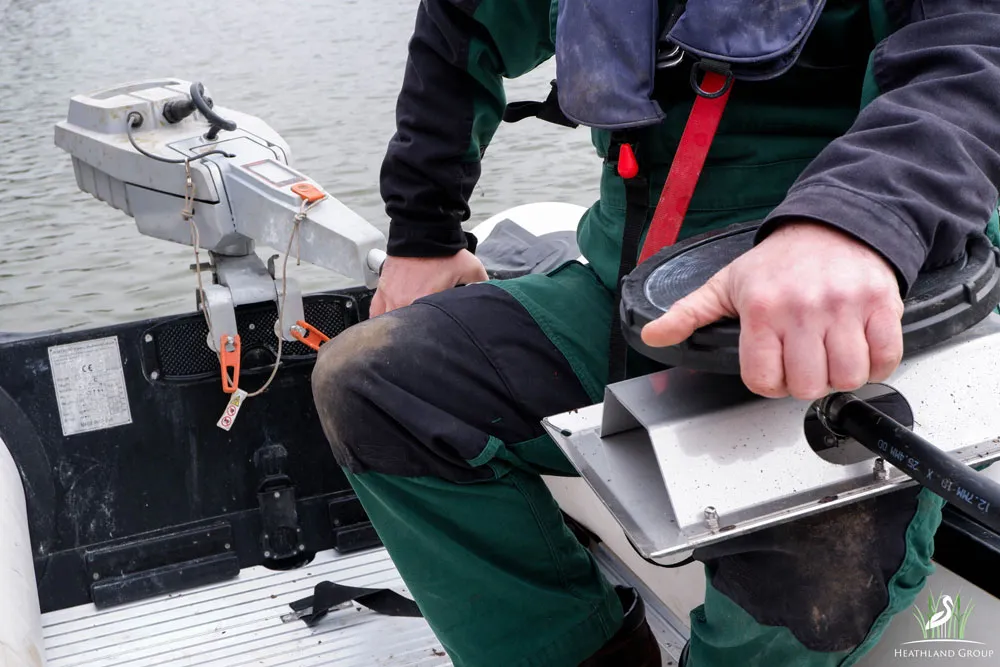
Der See des Longleat Forest wurde von unansehnlichen Algen geplagt, die erbsengrünes Wasser und unerwünschte Gerüche verursachten. Er benötigte dringend sauerstoffhaltiges Wasser, und wir hatten das richtige Belüftungssystem, um genau das zu gewährleisten. Unser intern hergestelltes OxiAir HD® diffundiert...
Vollständigen Artikel lesen
Die Abwasserbelüftung ist ein entscheidender Prozess bei der Behandlung von kontaminiertem Wasser, bei dem bewusst Luft in das Abwasser eingeführt wird, um das Wachstum und die Aktivität aerober Mikroorganismen zu fördern. Diese Methode nutzt die Kraft des Sauerstoffs, um den Stoffwechsel zu unterstützen...
Vollständigen Artikel lesen
Große Wasserfontänen für Seen sind ein beliebtes Merkmal, das ästhetisch ansprechend ist und das visuelle Erlebnis eines Sees verbessert. Diese Fontänen sind so konzipiert, dass sie beeindruckende Wasserstrahlen, Muster und manchmal synchronisierte Lichteffekte erzeugen.

Heathland Fountains and Aerators wurde im Mai 2019 von einem inländischen Kunden in Essex um ein Angebot gebeten. Der Kunde hat auf seinem Grundstück einen See, für den er einen schwimmenden Springbrunnen zur Belüftung benötigte. Die Beleuchtung von Springbrunnen für eine atemberaubende abendliche Gartengestaltung war ebenfalls Teil des Kundenauftrags.

Hier bei Heathland Group bieten wir zwei Arten der Seebelüftung an: diffuse Belüftung und schwimmende Belüftung, um Ihnen zu helfen, Ihren See effizient zu belüften. Ein diffuser Belüfter pumpt Luft durch die Diffusormembranen, die dann in Form von Millionen winziger Blasen an die Oberfläche gelangt...